
Appearance
Introduction
FilamentCraft is a visual website builder for Filament. Users stack sections, edit them, watch a live preview, and publish. It runs inside your existing panel, with your auth, tenants, and users.
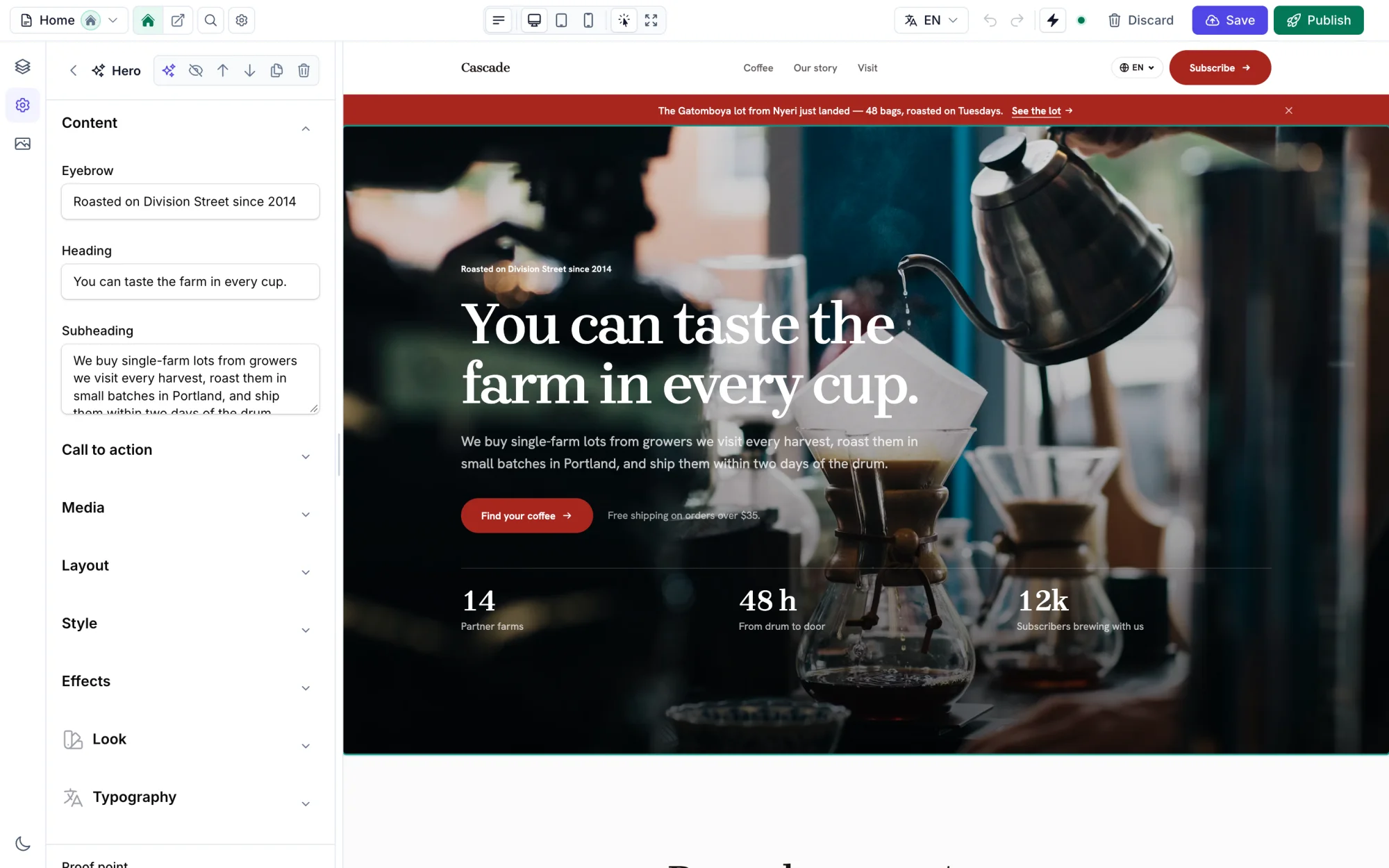
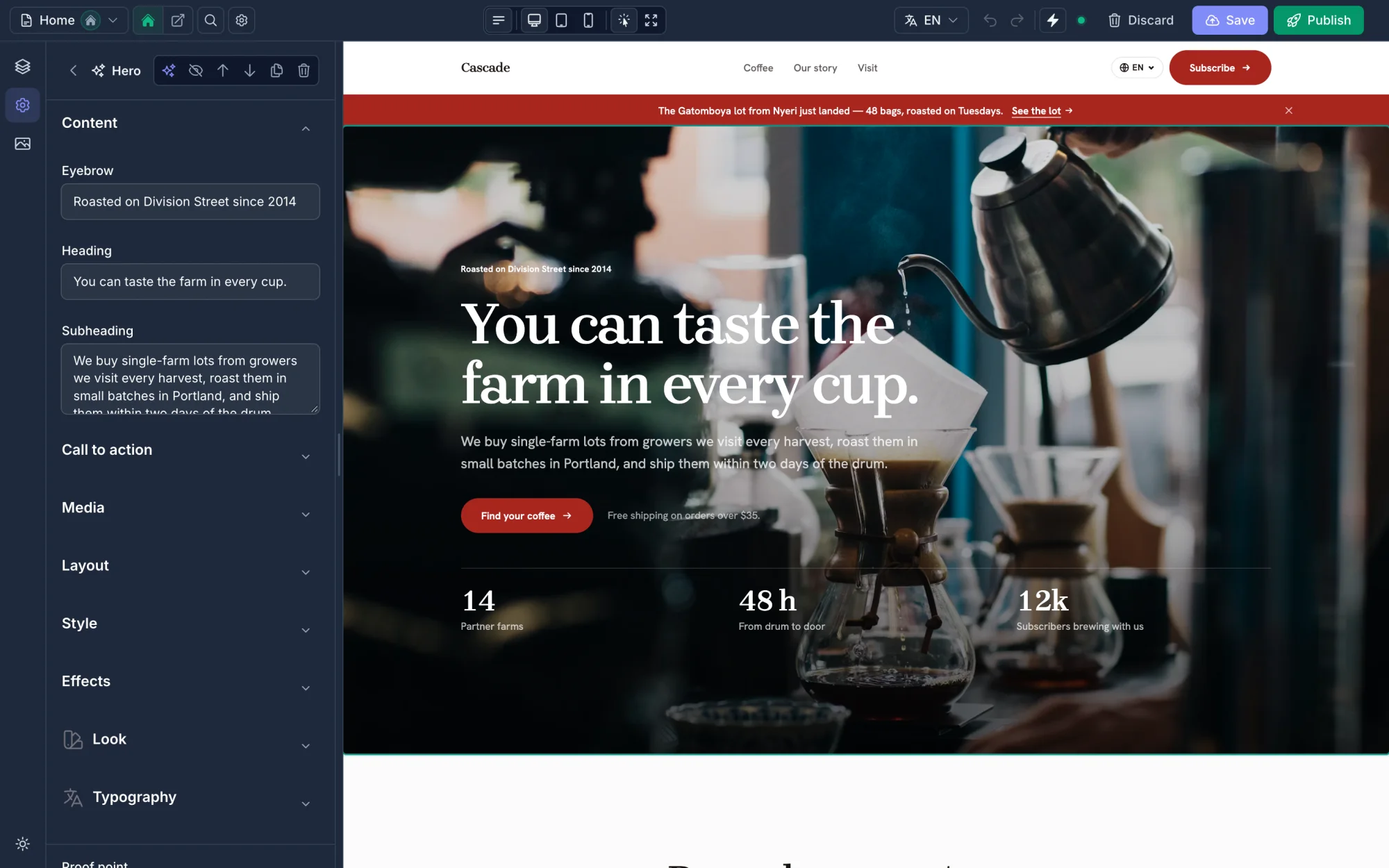
Live demo
Edit a real site. No sign-up.
Who it's for
- SaaS apps: a website for each customer.
- Agencies: client sites the client can edit safely.
- Stores: storefront pages backed by your product tables.
- Any Filament app: marketing pages without a separate CMS.
Install
bash
composer config repositories.filamentcraft composer https://packages.filamentcraft.dev
composer config http-basic.packages.filamentcraft.dev you@example.com YOUR-LICENSE-KEY
composer require filamentcraft/filamentcraft
php artisan filamentcraft:install
php artisan filamentcraft:starter
Then register the plugin. Details: Installation.
Requirements
| Package | Version |
|---|---|
| PHP | 8.2+ |
| Laravel | 11, 12, 13 |
| Filament | 4.x, 5.x |
| Livewire | 3.x, 4.x |
The AI assistant needs PHP 8.3 and Laravel 12+.
What's included
Editor
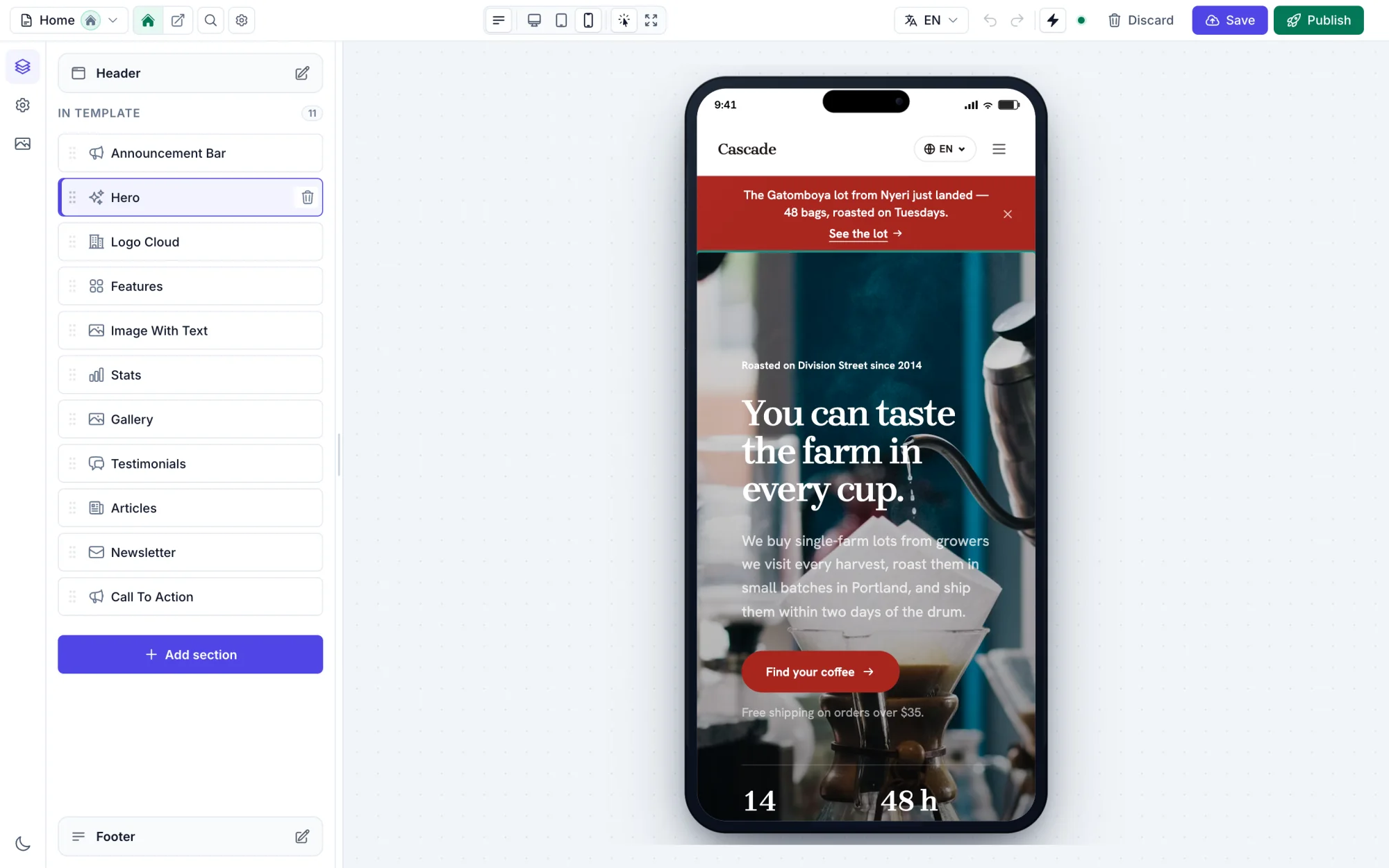
- Add, reorder, hide, and duplicate sections. 50 steps of undo.
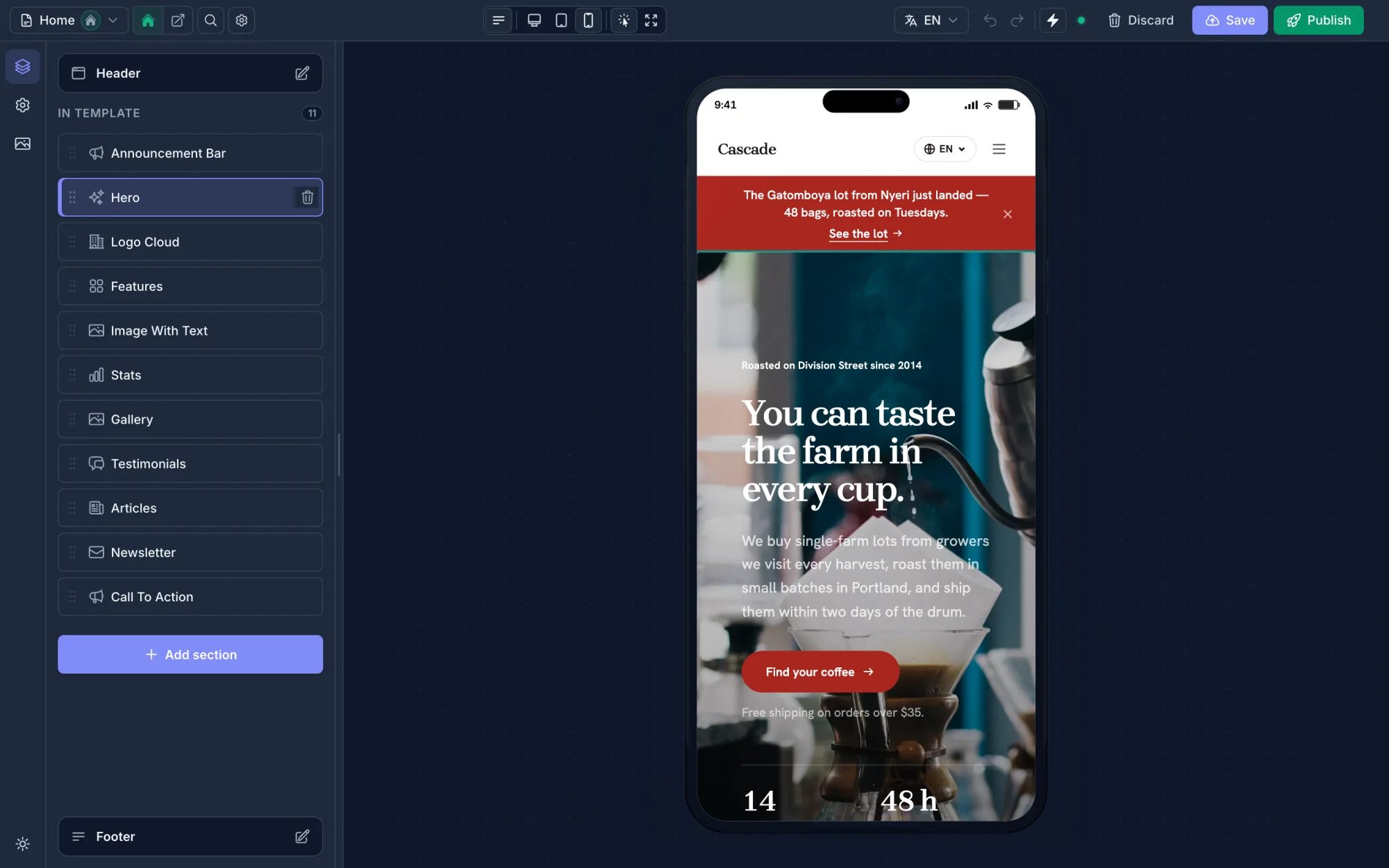
- Desktop, tablet, and mobile preview.
- Save a draft, publish, or discard back to the live version.
Sections
- 38 built-in sections, each with presets in four styles.
- Commerce sections (products, cart, checkout) that read your own models. See E-commerce Store.
- Your own sections in PHP and Blade, or built without code in the Section Builder.
Design
- Colors, fonts, and buttons, with 14 color schemes and all Bunny Fonts.
- Brand Kit to lock fonts and colors.
Sites
- One site per app or per tenant. See Tenancy.
- Custom domains and subdomains. See Public Routing.
- Multiple languages with RTL. See Localization.
- Meta tags, Open Graph, sitemap, robots.txt, llms.txt. See SEO.
- Per-site media library.
Production
- Cached published pages. A failing section renders empty instead of a 500.
php artisan filamentcraft:doctorfinds setup problems and prints the fix.
Terms
| Term | Meaning |
|---|---|
| Site | One website. Belongs to a tenant, uses one theme. |
| Theme | Design settings: colors, fonts, buttons, color schemes. |
| Template | One page, like home or pricing. |
| Revision | A saved version of a page. Publish makes one live. |
| Region | Header, footer, and announcement bar, shared by every page. |
| Section | One block on a page, like a hero. Settings plus a Blade view. |
Next
License
Paid, from filamentcraft.dev/pricing. Works fully without a key; unlicensed pages show a small "Built with FilamentCraft" link.